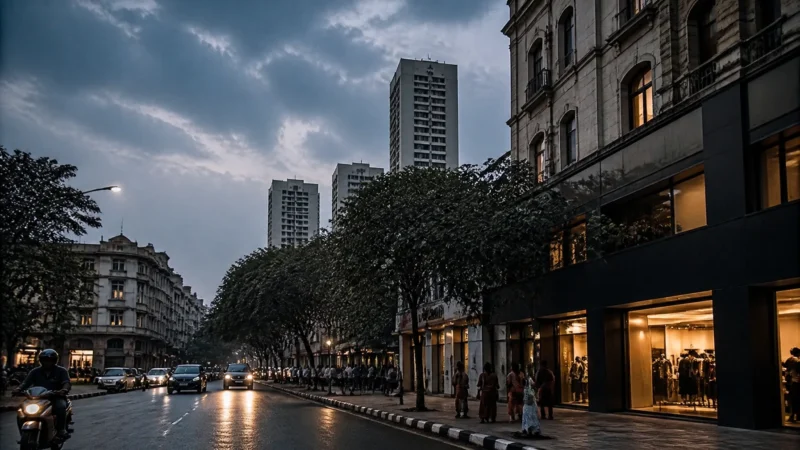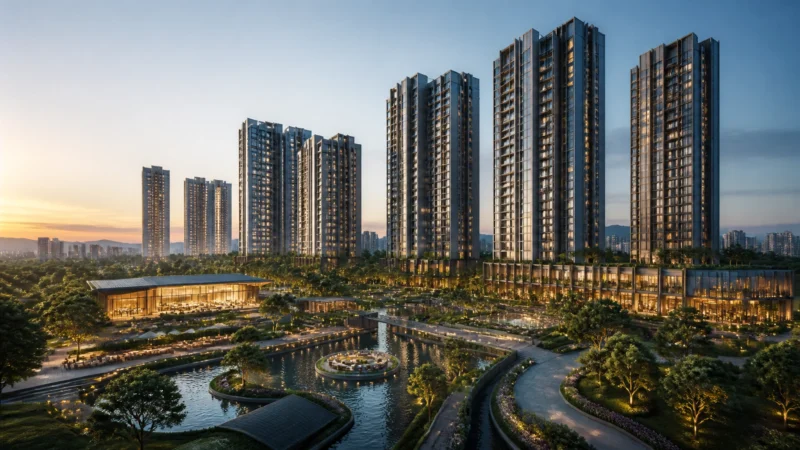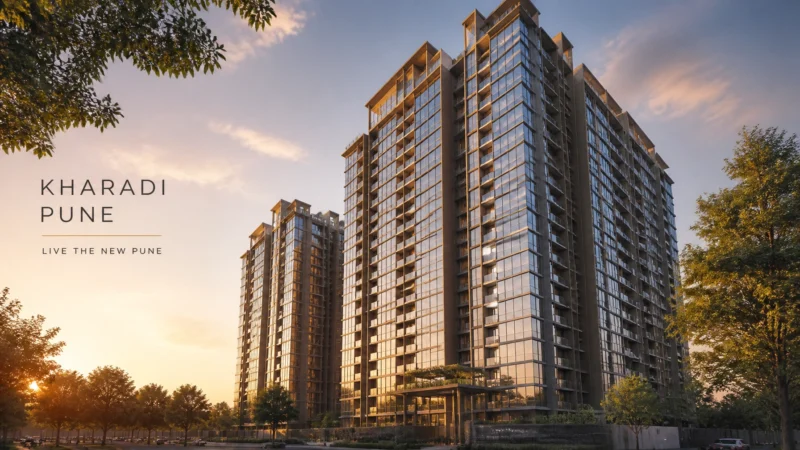
Pune’s airport belt is becoming a sharper real estate opportunity. Passenger traffic reached approximately 10.54 million in FY 2024–25, while airport activity and international connectivity continued to expand.[^1] At the same time, the Kharadi–Viman Nagar corridor remains one of Pune’s most important IT and corporate employment zones.
That creates a powerful intersection: airport access, business travel, technology companies, retail, healthcare, and residential growth.
For short-term rental investors, the opportunity is real. But it is not uniform.
Viman Nagar and Kharadi are the Core. Dhanori, Lohegaon, Wagholi, and Charoli are the Satellite markets. Each has a different balance of purchase cost, nightly rate, occupancy, and operational risk.
The right question is not, “Can Airbnb work near Pune Airport?”
It is: Which property, in which micro-market, with which guest strategy, can produce sustainable net returns?
Pune Airport Demand. IT Corridor Momentum. A Stronger Rental Bedrock.
The latest public Pune short-term rental data provides a useful citywide benchmark.
Airbtics reports approximately 1,265 active listings, a median occupancy rate of 44%, an average nightly rate of around ₹2,420, and median annual revenue near ₹3.97 lakh for the period measured through early 2026.
These figures are citywide. Airport-side properties can outperform them when they offer better access, furnishing, photography, reviews, and guest services.
The airport corridor benefits from several demand pools:
- Corporate travellers visiting Kharadi, EON IT Park, World Trade Center and nearby offices.
- Consultants and project teams staying for one to four weeks.
- Airport passengers requiring convenient overnight accommodation.
- NRIs and international visitors arriving for business, family visits, or property-related activity.
- Families and medical travellers seeking kitchens, laundry, and more space than a hotel room.
- Relocating professionals needing furnished accommodation before signing a long-term lease.
- Weekend and event travellers visiting Pune, nearby commercial hubs, or family occasions.
The airport is only one pillar. The wider IT corridor creates repeat demand.
That is why a well-positioned furnished apartment can serve both short stays and mid-term corporate accommodation.
Core and Satellite. One Airport Belt. Different Investment Logic.
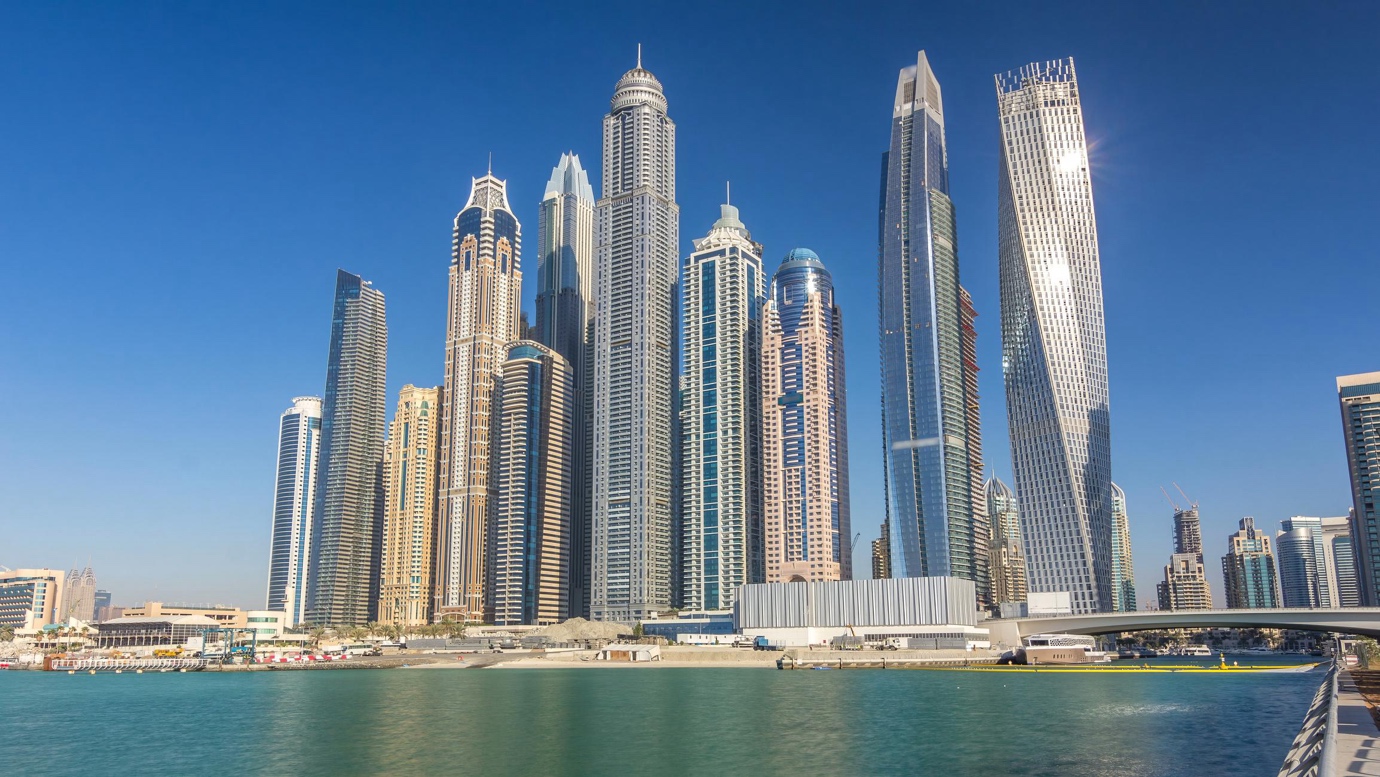
The Core: Viman Nagar and Kharadi
The Core markets have the strongest combination of location, demand depth, and guest willingness to pay.
| Micro-market | Indicative occupancy | 1 BHK ADR | 2 BHK ADR | Primary demand |
|---|---|---|---|---|
| Viman Nagar | 55–70% | ₹2,500–₹5,000 | ₹4,000–₹8,000 | Airport, corporate, retail, international |
| Kharadi | 50–65% | ₹2,000–₹4,000 | ₹3,000–₹6,000 | IT, GCCs, consultants, project teams |
These are indicative 2026 ranges, not guaranteed returns. They are consistent with published market estimates from Pune Realty Hub’s 2026 STR analysis, while actual performance depends on the building, furnishing standard, reviews, management, and season.
Viman Nagar generally commands a location premium because of airport proximity, Phoenix Marketcity, restaurants, and established hospitality infrastructure.
Kharadi may offer a stronger corporate-stay proposition. It is particularly suitable for apartments with a dedicated work desk, high-speed Wi-Fi, parking, reliable power backup, and weekly or monthly discounts.
The Satellite: Dhanori, Lohegaon, Wagholi, and Charoli
The Satellite markets can offer lower entry prices and emerging appreciation potential. However, they should not automatically be underwritten using Viman Nagar rates.
| Micro-market | Indicative occupancy | 1 BHK ADR | 2 BHK ADR | Investment character |
|---|---|---|---|---|
| Dhanori | 45–60% | ₹1,800–₹3,500 | ₹2,500–₹5,000 | Airport access with residential depth |
| Lohegaon | 40–55% | ₹1,700–₹3,200 | ₹2,500–₹4,500 | Budget airport and defence-linked demand |
| Wagholi | 40–55% | ₹1,600–₹3,000 | ₹2,400–₹4,500 | Value-led, growing residential corridor |
| Charoli | 35–50% | ₹1,500–₹2,800 | ₹2,200–₹4,000 | Emerging market; stronger for mid-term stays |
Public datasets rarely publish reliable neighbourhood-level Airbnb figures for all four Satellite locations. Therefore, these ranges are planning assumptions derived from the Pune citywide baseline and local positioning. Investors should validate them using live comparable listings, not projections alone.
The Satellite strategy works best when the purchase basis is disciplined and the property has a clear advantage: airport access, a new development, parking, a larger layout, attractive interiors, or proximity to a major employment cluster.
Seasonality. Occupancy Is Not a Straight Line.
Pune has a broader business base than a purely leisure destination. That supports relatively consistent demand, but occupancy still moves through cycles.
Typically:
- October to February: stronger leisure, wedding, family, and business demand.
- January to March: active corporate and project travel in many sectors.
- April to May: mixed performance; relocation and family demand can support longer stays.
- June to August: monsoon softness may affect leisure bookings, although corporate demand can continue.
- September: business activity often strengthens before the year-end period.
Weekdays may perform better in Kharadi because of office demand. Weekends can be stronger in Viman Nagar when retail, dining, and airport-linked stays support bookings.
A professional operator should not price every night equally. Dynamic pricing, minimum-stay rules, weekday discounts, and 7–30 day offers are essential.
1 BHK vs 2 BHK. Which Unit Builds Better Economics?
A 1 BHK is usually easier to furnish, price, and fill. It suits solo business travellers, couples, and short airport stays.
A 2 BHK has higher absolute revenue potential. It can attract families, two-person project teams, and guests staying for several weeks. However, it requires more capital, larger furnishing budgets, and higher cleaning and utility costs.
Illustrative annual operating model
The following model is for comparison only. It assumes a professionally furnished unit, a blended ADR, and a management fee separate from utilities and maintenance.
| Item | 1 BHK example | 2 BHK example |
|---|---|---|
| Illustrative ADR | ₹3,500 | ₹5,200 |
| Occupancy assumption | 55% | 58% |
| Gross booking revenue | ₹7.03 lakh | ₹11.01 lakh |
| Management fee at 18% | ₹1.27 lakh | ₹1.98 lakh |
| Utilities and internet | ₹0.72 lakh | ₹0.96 lakh |
| Society maintenance and repairs | ₹0.48 lakh | ₹0.72 lakh |
| Housekeeping consumables and linen | ₹0.45 lakh | ₹0.70 lakh |
| Replacement reserve and marketing | ₹0.56 lakh | ₹0.88 lakh |
| Indicative net operating income | ₹3.55 lakh | ₹5.77 lakh |
If the all-in investment, including furnishing, is ₹85 lakh for the 1 BHK and ₹1.45 crore for the 2 BHK, the indicative gross yields are approximately 8.3% and 7.6% respectively. Net operating yields before financing, income tax, and major capital expenditure are approximately 4.2% and 4.0%.
This is the discipline investors need. Gross revenue looks attractive. Net yield tells the truth.
Management fees commonly range from 15–25% of booking revenue, depending on the scope of service. A full-service operator may handle listing optimisation, guest communication, check-in, cleaning, maintenance coordination, and review management.
Do not compare a gross Airbnb figure with a net long-term rent figure.
What Travellers Actually Want.
Guests do not buy square footage alone. They buy convenience and peace of mind.
The strongest airport-belt listings typically provide:
- Reliable high-speed Wi-Fi.
- Dedicated work desk and comfortable chair.
- Air conditioning in bedrooms and living areas.
- Self check-in or dependable late-night access.
- Secure parking.
- Lift access and power backup.
- Washing machine and practical kitchen equipment.
- Hotel-quality mattresses and clean bathrooms.
- Clear directions from the airport.
- Fast issue resolution.
- Weekly and monthly pricing.
- Transparent house rules and professional photography.
Corporate guests may also value proper invoices, flexible check-in, quiet surroundings, and a workspace more than decorative luxury.
A premium sofa cannot compensate for poor Wi-Fi. A beautiful listing cannot compensate for unreliable housekeeping.
Evaluate the Property. Then Evaluate the Building.
Before purchasing a Pune real estate asset for short-term rental, use this checklist:
1. Confirm society and legal permissions
Review the society’s by-laws and speak with the managing committee before committing. Some housing societies restrict short-term rentals or frequent guest turnover.
Also verify applicable municipal, police, tax, GST, fire-safety, and registration requirements with qualified local professionals. Regulations and enforcement can change.
2. Measure the actual travel experience
Check the real drive time to Pune Airport, Kharadi offices, restaurants, hospitals, and transport links at peak hours. “Near airport” is not a sufficient investment thesis.
3. Study comparable listings
Review at least 15–20 comparable properties. Track their rates, reviews, availability, amenities, photography, cancellation policies, and minimum stays.
4. Build three scenarios
Underwrite:
- Downside: 40% occupancy.
- Base case: 50–60% occupancy.
- Upside: 65% or higher occupancy.
If the property only works in the upside case, the investment is not yet secure.
5. Keep a long-term rental fallback
A good investment should have a Plan B. Compare expected short-term net income with a conventional furnished lease. This protects the asset if society rules, regulation, competition, or demand patterns change.
Pune Core. Dubai Satellite. A Cross-Border Constellation.
For investors based in the UAE, Oman, or elsewhere, Pune can serve as a Core Indian income-and-growth market. Dubai can function as a Satellite market for international diversification, liquidity, and global asset exposure.
The two markets should not be compared using headline yields alone. Compare:
- Net yield after service charges and management.
- Currency exposure.
- Financing cost.
- Vacancy assumptions.
- Furnishing and licensing requirements.
- Exit liquidity.
- Tax and compliance obligations.
From the lanes of Dhanori to the boardrooms of Dubai, the principle remains the same: strong foundations first, attractive projections second.
GLAMOUR PROPERTIES provides real estate advisory across Pune, Indian metros, and Dubai, helping investors evaluate location, asset quality, transaction risk, and income potential with greater clarity.
The Bottom Line. Demand Is Real. Underwriting Matters.
Airbnb rentals near Pune Airport have a credible 2026 demand story. Viman Nagar leads on airport access and diversified demand. Kharadi is a strong corporate and IT-corridor market. Dhanori, Lohegaon, Wagholi, and Charoli offer value and future potential, but require more conservative occupancy assumptions.
The winning investment is not simply the cheapest apartment or the highest advertised ADR.
It is the property with:
- A permitted operating model.
- Reliable airport and IT-corridor access.
- Professional furnishing.
- Strong guest amenities.
- Sensible acquisition cost.
- Transparent net-income calculations.
- A long-term rental fallback.
At GLAMOUR PROPERTIES, our approach is built on integrity, clear numbers, and long-term partnership. Let’s build a Pune investment strategy with foundations strong enough for shared growth.
[^1]: Punekar News: Pune Airport records 10.54 million passengers in FY 2024–25